In internal turning and deep hole machining, the performance of your cutting edge is entirely dependent on the structural integrity of your setup. While machinists spend significant time optimizing insert geometries and choosing the correct cutter head, the boring bar holder remains the critical, unheralded anchor of the entire operation.
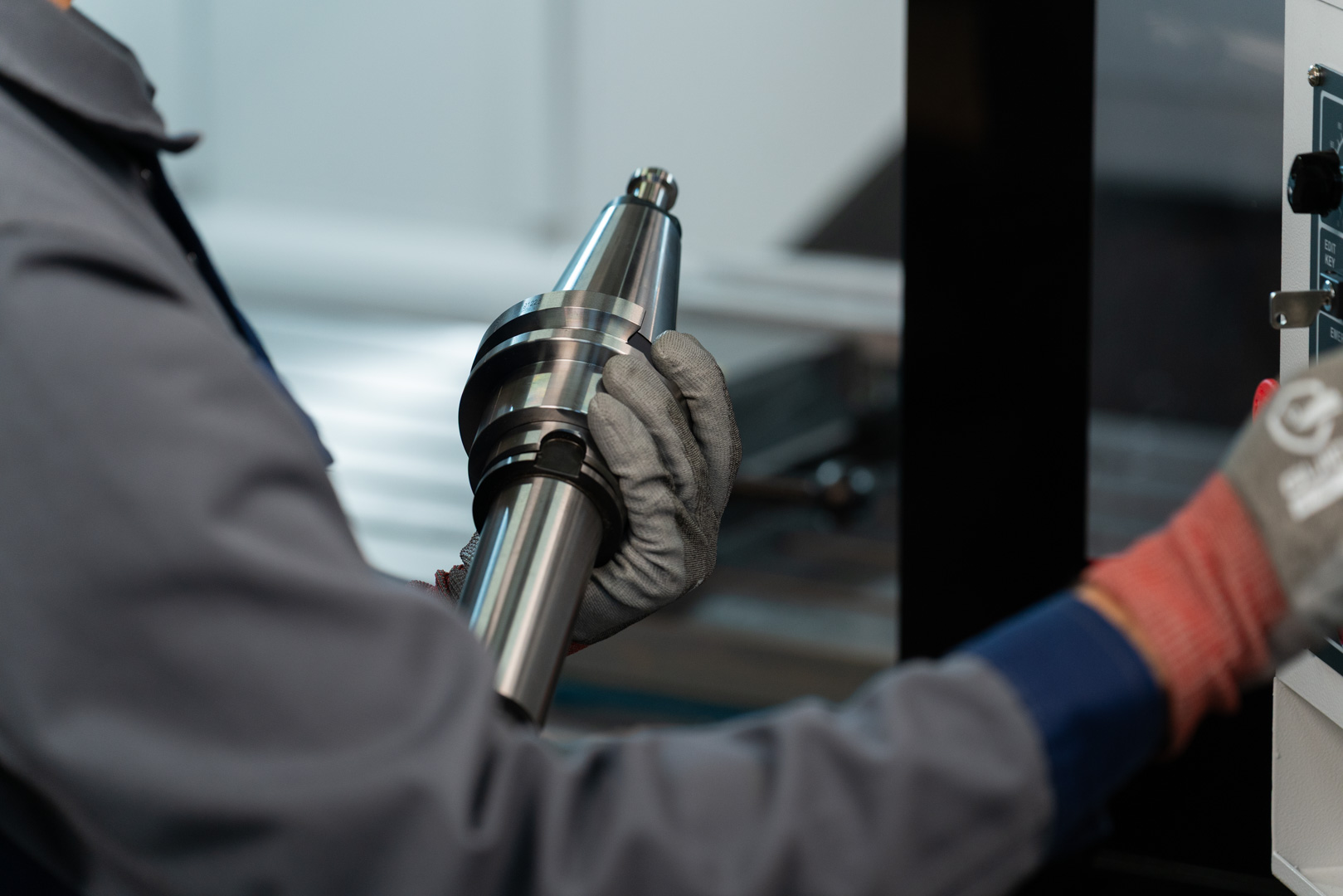
Acting as the vital bridge between the machine’s rigid turret or spindle and the cantilevered cutting tool, the holder dictates the system’s baseline stability. A poorly selected or improperly clamped boring tool holder introduces unwanted compliance, misaligns the center height, and triggers severe chatter before the tool even reaches its intended depth.
Types of Boring Bar Holders
Depending on the machine architecture – whether a CNC lathe, multi-tasking machine, or machining center – the style of the holder changes to accommodate different kinematics.
1. Cylindrical Clamping Blocks & Split Sleeves
Commonly utilized as a traditional lathe tool holder on CNC turning centers, these blocks mount directly to VDI or BMT turrets. They feature a straight bore designed to secure cylindrical-shank boring bars.
- Split-Sleeve Design: Wraps completely around the circumference of the bar, providing maximum surface contact and uniform clamping pressure.
- Screw-Down Design: Uses direct screws to clamp the bar. While simple, direct screws can scar the tool shank and apply uneven force, which can distort the internal mechanisms of high-performance tooling.
2. Modular Connection Holders
Modern CNC turning and multi-tasking machines increasingly rely on modular, quick-change systems. Instead of clamping a bare cylindrical shank, the tool features an integrated, tapered modular shank that locks directly into a matching receiver on the machine turret. This eliminates the need for independent clamping sleeves and dramatically accelerates setup times.
3. Precision Boring Heads
While a standard boring bar holder on a lathe keeps the tool stationary while the workpiece rotates, milling and machining centers reverse this dynamic. In these applications, a specialized boring head is mounted into the rotating spindle. These heads feature micrometer-level adjustability to control the radial cutting diameter precisely, requiring an incredibly rigid spindle interface to withstand asymmetric centrifugal forces.
Critical Machine Interfaces: Capto, HSK, and Beyond
The interface between the holder and the machine turret or spindle determines how effectively cutting forces are distributed. When deep hole machining introduces high bending moments, standard interfaces provide varying degrees of resistance to deflection.
- Polygon Shank Coupling (PSC / Coromant Capto®): Widely considered the gold standard for turning and multi-tasking applications. Its unique tapered polygon shape provides simultaneous face contact and high torque transmission. This dual-face contact prevents the holder from tilting under heavy radial loads, making it exceptionally rigid for long-reach internal turning.
- HSK (Hohl-Schaft-Kegel): Primarily found in machining centers and high-speed multi-tasking spindles. HSK interfaces utilize internal clamping segments that expand under centrifugal force, pulling the holder tight against the spindle face. This ensures exceptional radial stiffness and precise center-height repeatability.
- Steep Taper (BT/CAT): Reliable for general milling operations but lacks the face-contact advantage of HSK or Capto unless specialized dual-contact (Big-Plus) configurations are used. Without face contact, steep tapures are more prone to micro-movement under the severe leverage generated by long boring bars.
Key Criteria for Holder Selection
To maximize metal removal rates and eliminate tool deflection, prioritize the following factors when selecting your holder system:
Clamping Length Ratio
For cylindrical shank setups, the engagement length inside the holder must be sufficient to resist the leverage of the overhang. A general engineering rule is a minimum clamping length of 3 to 4 times the bar diameter (3–4xD). Insufficient clamping length creates a pivot point inside the holder, multiplying vibration.
Center Height Alignment
In turning operations, the cutting tip must sit precisely on the workpiece centerline. A holder that allows the bar to twist or sit slightly off-center changes the effective clearance and rake angles of the insert. This misalignment often leads to the insert “plowing” or rubbing against the material rather than shearing it cleanly, causing rapid tool wear and poor surface finishes.
Internal Coolant Delivery
Deep-hole operations require direct chip evacuation. Ensure the holder supports high-pressure, through-tool coolant routing. This keeps chips from re-cutting and nestling inside the bore, protecting both the machined wall and the insert.
Unleashing Tool Capability with MAQ Compatibility
A high-performance holder interface is only as valuable as the tool it supports – and conversely, an advanced tool cannot compensate for a weak interface.
At MAQ, our advanced vibration-damped tools are engineered to integrate seamlessly with the industry’s most rigid standard interfaces, including Capto-compatible (PSC) shanks, HSK connections, and precision cylindrical bodies.
MAQ’s Self-Tuning Mass Damper (STMD™) technology relies on a solid, unyielding connection to the machine to function at peak efficiency. When paired with a high-stiffness interface like Capto or HSK, the mechanical damping system inside the MAQ bar can precisely absorb real-time resonant frequencies without being disrupted by micro-movements at the holder joint.
Furthermore, because MAQ’s design avoids the temperature-sensitive elastomer elements found in traditional damped tools, it doesn’t require manual tuning or specialized digital monitoring dashboards to maintain stability. By matching a rigid, high-quality boring bar holder interface with MAQ’s plug-and-play mechanical innovation, machine shops can confidently bypass conservative cutting parameters – maintaining higher feed rates and deeper cuts even in demanding, long-reach applications.