
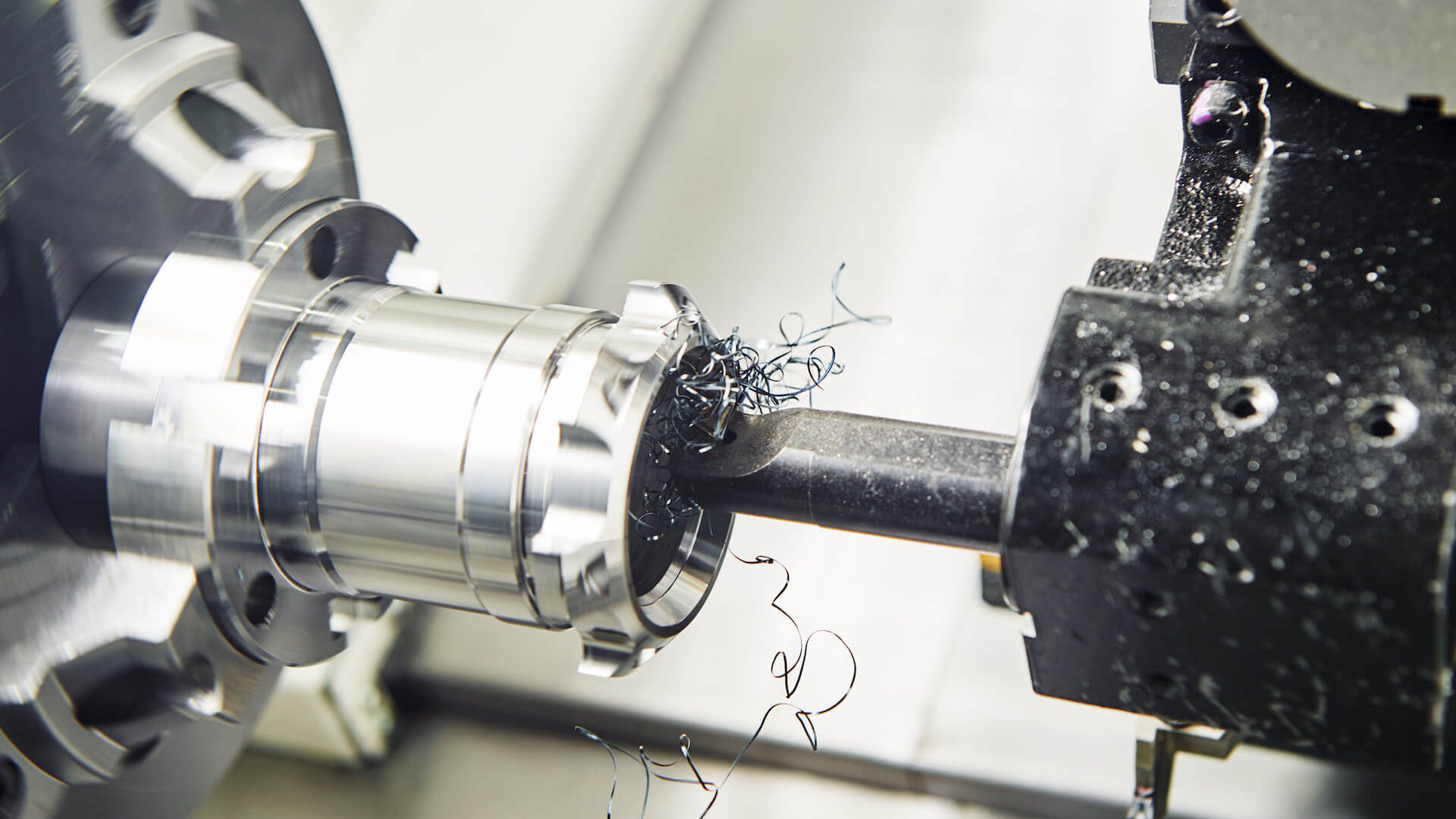
Every machinist knows the frustration: a new turning insert is fitted, the machine starts, and within seconds the familiar whine of chatter fills the workshop. Feeds are reduced. Speeds are backed off. The setup that looked good on paper becomes yet another compromise in practice.
For decades, selecting turning inserts meant weighing geometry, grade, and coating. But even the highest-performing insert can only deliver its full potential when the tool setup itself is stable. And stability – true, consistent, vibration-free stability – has historically been difficult to achieve without significant effort.
MAQ’s approach changes that equation. By combining ISO-standard turning inserts with STMD™ tool holders that self-tune to eliminate vibration, MAQ delivers what the industry has long needed: plug-and-play stability that requires no tuning, no sensors, and no compromise.
Why Turning Inserts Underperform Without Stability
Turning inserts are engineered for performance. Modern grades and coatings are designed to handle extreme temperatures, high cutting forces, and demanding materials. Yet in practice, many operators run their inserts well below rated capabilities – not because of any deficiency in the insert itself, but because the setup around them is unstable.
When vibration enters a turning setup, the consequences are predictable:
- Cutting speeds and feed rates are reduced to stay within a stable window, limiting material removal rates and increasing cycle times.
- Turning inserts wear unevenly and fail prematurely, driving up replacement costs.
- Surface finish deteriorates, sometimes requiring secondary operations to meet specification.
The result is that the true capability of a high-quality turning insert is rarely realised. The limiting factor is not the insert – it is vibration.
The Traditional Answer – and Its Limitations
Conventional solutions to vibration in turning have centred on tuned mass dampers. These devices work by adding a counteracting mass to the toolholder, tuned to oppose the dominant vibration frequency of the setup. When correctly configured, they can make a real difference.
The problem is the word “tuned.” A damper set up for one combination of tool length, overhang, and workpiece material may become ineffective the moment any of those variables change. In practice, turning operations involve constant variation: different part geometries, changing depths of cut, varying material batches. Each change can shift the vibration frequency and render a manually tuned damper less effective – or useless.
STMD™ – Self-Tuning, Every Time
MAQ’s self-tuning mass damper (STMD™) technology was designed to solve exactly this problem. Rather than requiring manual configuration, STMD™ adapts mechanically to the actual vibration conditions present during cutting. The damper’s internal material responds dynamically to changing frequencies, maintaining effectiveness across a wide range of setups and length-to-diameter ratios.
For turning operations, this means:
- True plug-and-play operation. Fit the tool, set the parameters, and cut. There is no calibration step, no setup window, and no expertise required to activate the damping effect.
- Stability across changing conditions. As tool length, material, or cutting parameters change, STMD™ adapts automatically. The same tool remains effective across a range of setups without any intervention.
- No electronics, no software. STMD™ is a purely mechanical system. There are no sensors to calibrate, no software to update, and no components that fail in the harsh environment of a turning centre.
- Maintenance-free by design. Once installed, the STMD™ tool holder requires no ongoing attention. It simply works – part after part, shift after shift.
- Measurable results. MAQ’s STMD™ turning tool holders are proven to increase productivity by up to 30% and reduce tooling costs by up to 10%.
Cutter Heads Designed for ISO Turning Inserts
MAQ’s approach is built around cutter heads and vibration-damped tool holders designed to work with ISO turning inserts. This gives manufacturers a simpler way to improve turning performance without changing how they source or work with inserts across the rest of the operation.
Because insert performance is never defined by geometry or grade alone. It also depends on how stable the setup is. When vibration enters the cut, even a well-chosen turning insert can suffer from inconsistent wear, reduced surface quality, and shorter usable life.
By improving stability in the tool body and cutter head, MAQ creates better conditions for the insert to perform as intended. That means more predictable wear, smoother cutting, and greater confidence in the process.
For certain applications, particularly very small or hard-to-source sizes, MAQ can also provide selected inserts. But the core advantage lies in the setup itself: a more stable machining process that helps standard ISO turning inserts perform better.
For machinists, that means a practical path to better results. The insert strategy can remain the same, while the performance of the process improves.
The Impact on Turning Insert Performance and Cost
One of the clearest benefits of vibration-free turning is the effect on insert life. Chatter creates uneven contact between the cutting edge and the workpiece. This leads to micro-impacts, faster wear, edge chipping, and inserts being changed earlier than necessary.
When the process is stable, turning inserts operate under the conditions they were designed for. Wear becomes more predictable, tool life improves, and the cost per component is reduced. Surface finish also becomes more consistent, which lowers the need for rework and supports higher productivity.
For high-volume operations, the effect is significant. Lower insert consumption, fewer interruptions, and more reliable machining all contribute to a stronger overall process.
Want to know more? Contact us today and experience the future of machining, now.